How Sandstone Training’s ‘Save a Life’ Course Redefines Outdoor First Aid
As Vango marks its 60th anniversary, the brand is using the milestone to reinforce a long-standing commitment to safety, education and responsible adventure across the outdoor community. Through partnerships with Glenmore Lodge, Sandstone Training, and initiatives supporting The Duke of Edinburgh’s Award alongside local schools, Vango continues to invest in the skills that make time in the mountains safer, more accessible and ultimately more enjoyable. Outdoor writer and friend of Outdoor Licence Davy Wright tells us more:
Pressure Tested
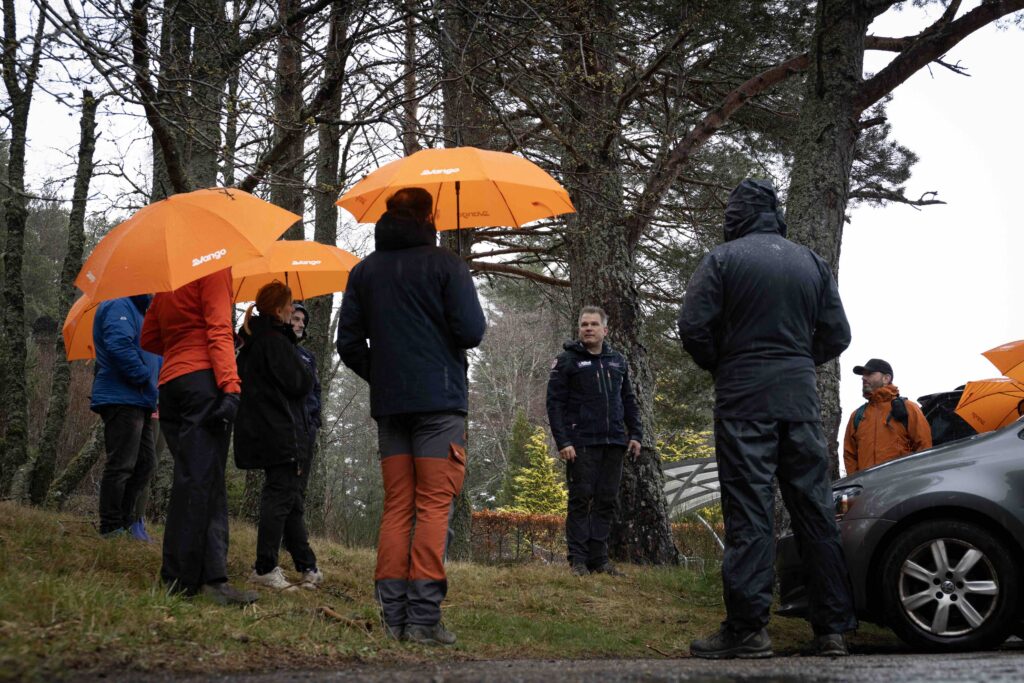
The doors flew wide open, letting in a gust of freezing air. Outside, heavy snow was blanketing the pine trees, but inside, the quiet of the room was instantly shattered.
“There’s been an accident! My mate’s trapped—you need to help him right now!”
Or something to that affect, as immediately my adrenaline had risen sharply and my memory of the first scenario is a bit hazy! Before I could even process the sudden shift in atmosphere, the small group of four I was teamed up with were propelled out into the cold and directed toward a nearby vehicle. Positioned underneath the chassis was a realistic training mannequin, called Mike, was tucked behind the rear wheel and had pretty serious ‘injuries’. Standing over the scene were our instructors, completely immersed in their roles as the injured party’s frantic, screaming friends. They didn’t make it easy. By design of course, their shouting and manufactured chaos injected instant, raw anxiety into the group, forcing us to grapple with real psychological pressure from the very first minute. Eventually our team came together and awkwardly patched Mike up, only to be told due the time we took to stop the bleed was longer than two and half minutes. The patient didn’t make it.
The Method Behind the Chaos
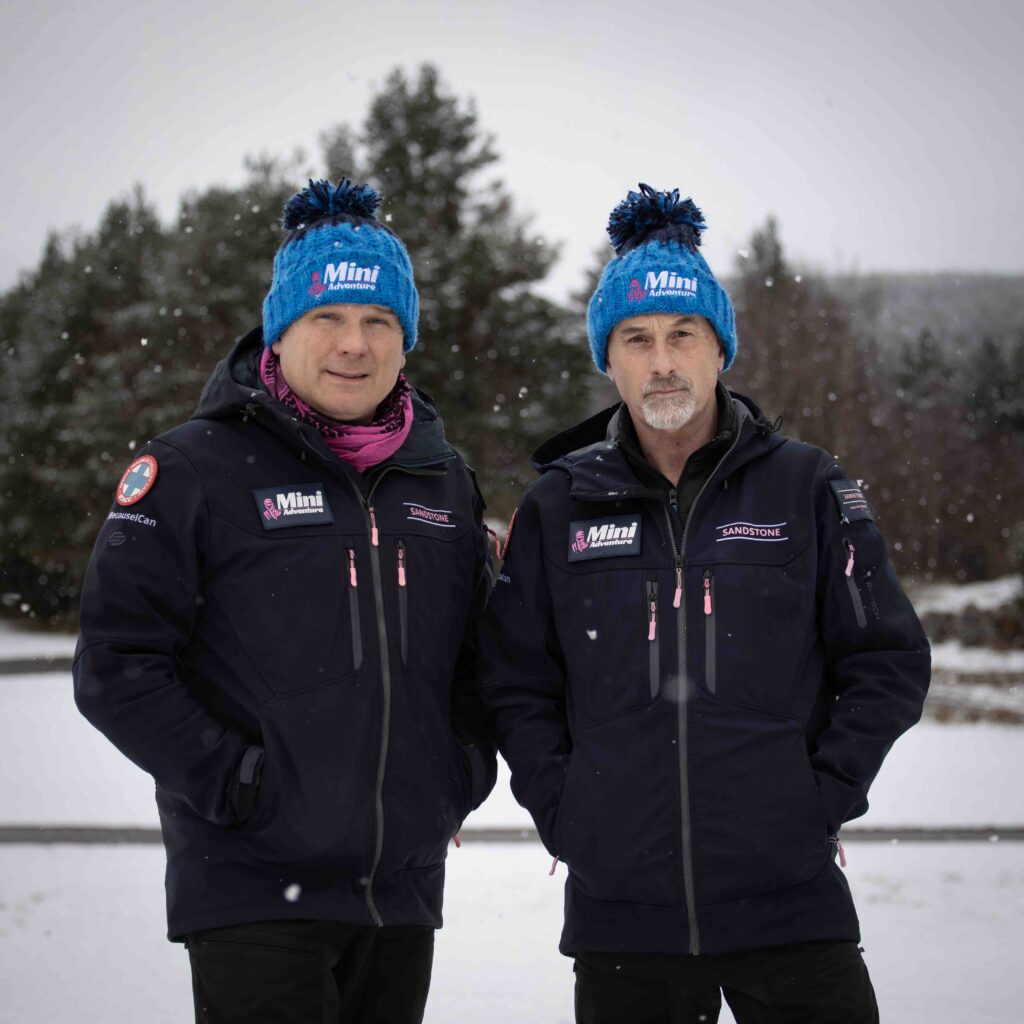
Hosted at Glenmore Lodge, Scotland’s esteemed national outdoor training centre nestled in the shadows of the Cairngorm Mountains, this unique course was developed to prepare people for worst-case remote scenarios. This wasn’t your average, sterile classroom first aid course. This was the immersive “Save a Life” course designed by the experienced team at Sandstone Training. Tim Bradshaw, has a highly experienced background in the military and security services. And has a habit of poor holiday choices, breaking his back when coming off a motor bike on the Dakar Rally. Also, Mike Hope, Chief First Aid Instructor, has spent his entire professional and personal life mastering and delivering high-level trauma medicine and emergency response training in the most demanding environments. The course is supported by renowned Scottish outdoor company Vango Outdoors, the curriculum is built around a singular, vital goal: keeping a casualty alive long enough for professional emergency services to reach them.
Tim repeatedly used mantra “If they’re bleeding STOP it, if they aren’t breathing HELP them, if they’re cold WARM them”
This was the foundation of the Save a Life course. The distinct, stress-injected style of the course is a direct reflection of the team behind it. Sandstone Training doesn’t rely on textbook theory; their training is built on real-world operational pressure.
They are firmly committed to training candidates to be safe, confident responders. By forcing delegates to make decisions under simulated duress, they bridge the gap between knowing what to do and actually being able to do it when adrenaline spikes.
Building the Foundation: From Panic to Practice
After the intense shock of the initial vehicle extraction scenario, we moved back inside the Lodge to break down what had just happened and start to build up our medical knowledge.
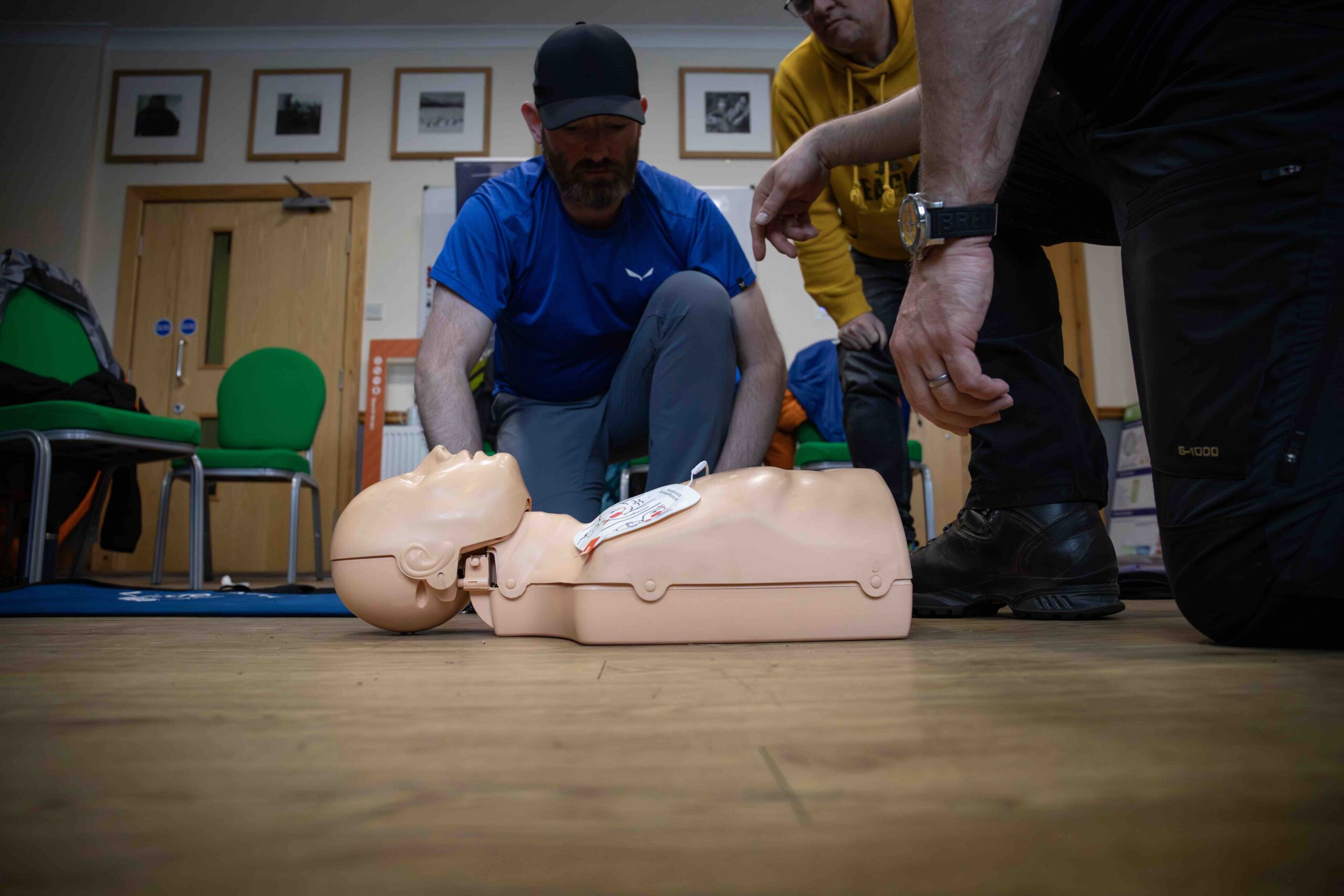
The training progressed systematically, developing our hands-on experience with vital technical skills. We dove deep into the core requirements of basic life support, focusing on high-quality CPR and the benefits of an Automated External Defibrillator (AED).
In the UK, approximately 30,000 people suffer an out-of-hospital cardiac arrest every year. Deploying a defibrillator alongside immediate CPR within the first few minutes can increase a casualty’s survival rate by upwards of 75 per cent. In a remote mountain location or a distant trail, knowing how to consistently deliver CPR is the difference between life and death.
With the mechanics of CPR and bleeding control locked in, we were sent back outside into the elements for our second major exercise.
This time, the atmosphere felt markedly different. While the scenario thrown at us was entirely new, our collective stress levels were visibly lower. The initial shock factor had evaporated; we were adjusting to the instructors’ high-intensity roleplay, we understood how to establish a safe perimeter, and we had real, actionable knowledge to rely on. Instead of freezing up under the pressure, the team communicated clearly, delegated roles well, and managed the scene with a calm, methodical focus.
The Ultimate Test: The Final Scenario
The course culminated in a final, more complex multi-casualty scenario designed to push our newly acquired skills to the limit. As we moved progressively through the trees, we stumbled upon various casualties scattered throughout the forest, each presenting with different, severe injuries.
Unlike the blind panic of our very first exercise earlier in the day, the transformation in the group was undeniable. The team was calm, collected, and completely coordinated. We systematically assessed the scene, communicated clearly, and delegated tasks without hesitation.
We tightened tourniquets where catastrophic bleeding required it, packed wounds, and wrapped the casualties in space blankets to protect them from hypothermia. Simultaneously, we coordinated the emergency services were officially called, giving precise grid references, and positioning team members at key points to guide the paramedics into the woods. Everybody felt completely comfortable in their roles, working together as a fluid, effective unit.
Outfitted for Survival: The “Save a Life” Kit
One of the most immediate, practical takeaways from the course was a harsh reality check regarding standard first aid kits. At the beginning of the course, Tim held up two of the popular outdoor market first aid kits showing that, although some of the kit has its place in an emergency, most of it just isn’t robust enough. Traditional kits packed with safety pins and flimsy, generic bandages simply don’t cut it when you are dealing with catastrophic outdoor trauma.
To bridge this gap, Sandstone Training introduces delegates to upgraded, purpose-built “Save a Life” Kits. These are modern, streamlined trauma packs designed to deal with critical injuries in the field.
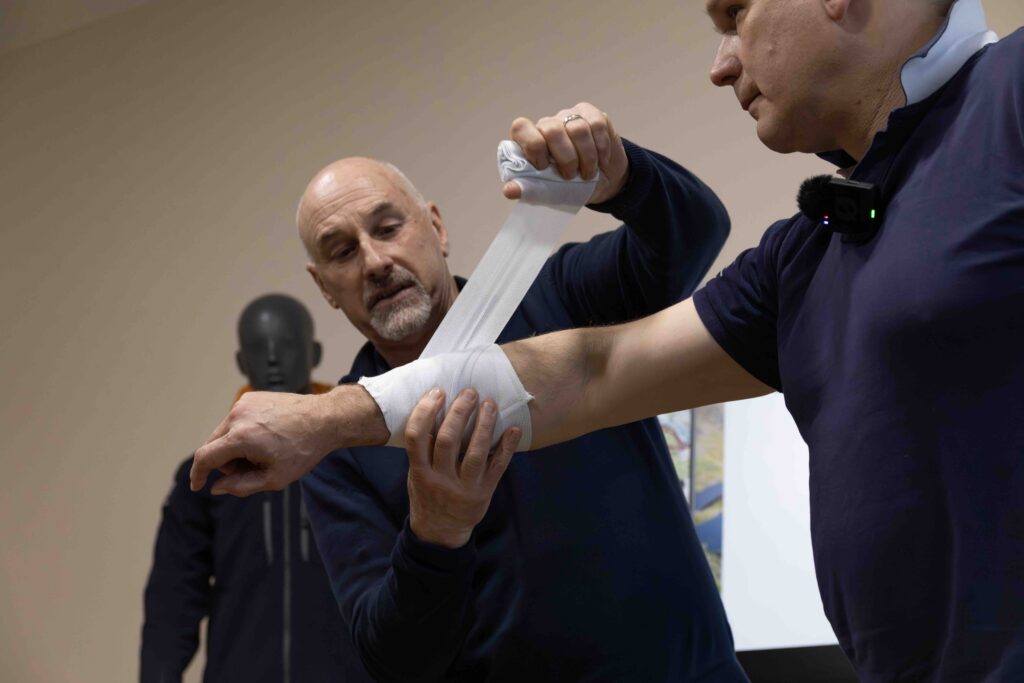
CAT Tourniquet: Crucial for stopping massive, life-threatening haemorrhaging from limbs within seconds.
Trauma Bandages: High-quality, elasticated trauma dressings that allow you to apply direct, heavy pressure to severe wounds.
Tough-Cut Shears: Heavy-duty medical scissors capable of slicing through thick outdoor layers, waterproofs, and boot leather instantly to expose an injury.
Plus: Compact Gauze, Microporous Tape, Face Shield (CPR), Space Blanket, Closure Strips, Wound Cleansing Wipes.
Looking back on the intensive half day training at Glenmore Lodge with Sandstone Training, the true value of the “Save a Life” course lies in its mindset shift to the requirements of the first aid in a remote environment. It is an incredibly informative, deeply practical insight into the realities of remote emergency response.
When a crisis hits in the great outdoors, adrenaline spikes and anxiety runs dangerously high. This course teaches you that survival doesn’t only depend on the appropriate equipment in your first aid kit, it also relies on your ability to control what’s going on around you.
Lessons from the Slopes
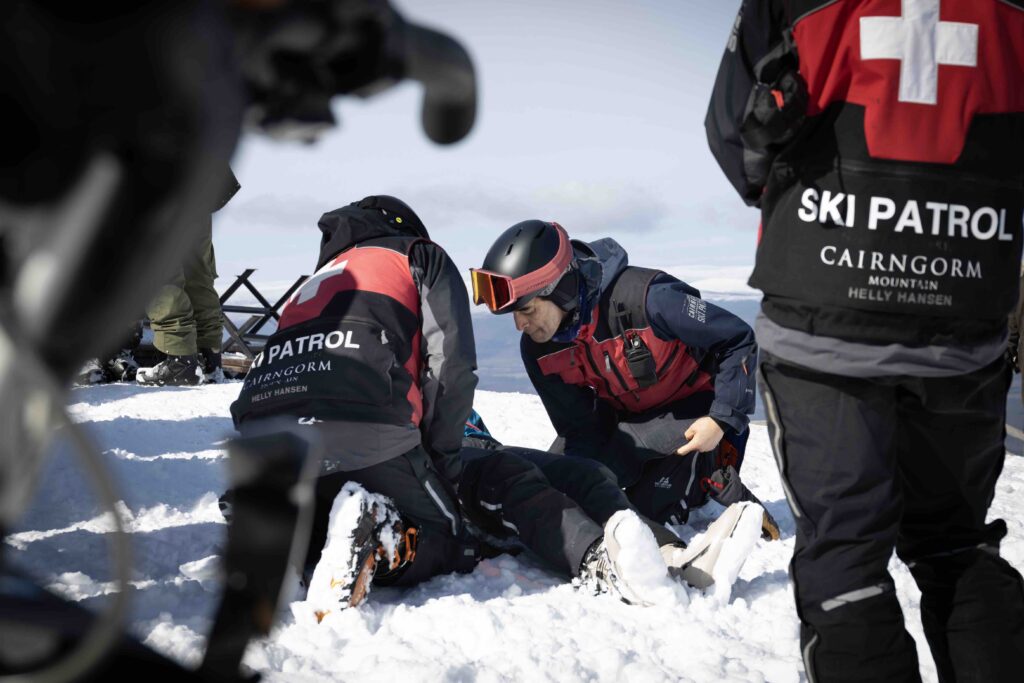
Fortunately, our time spent higher up on Cairngorm Mountain was a completely different experience from the high-pressure simulations in the forest. Stepping out onto the slopes, we were treated to spectacular, sweeping views from the Ptarmigan Cafe, giving us a moment to truly take in the dramatic scale of the landscape we were training to prepare for.
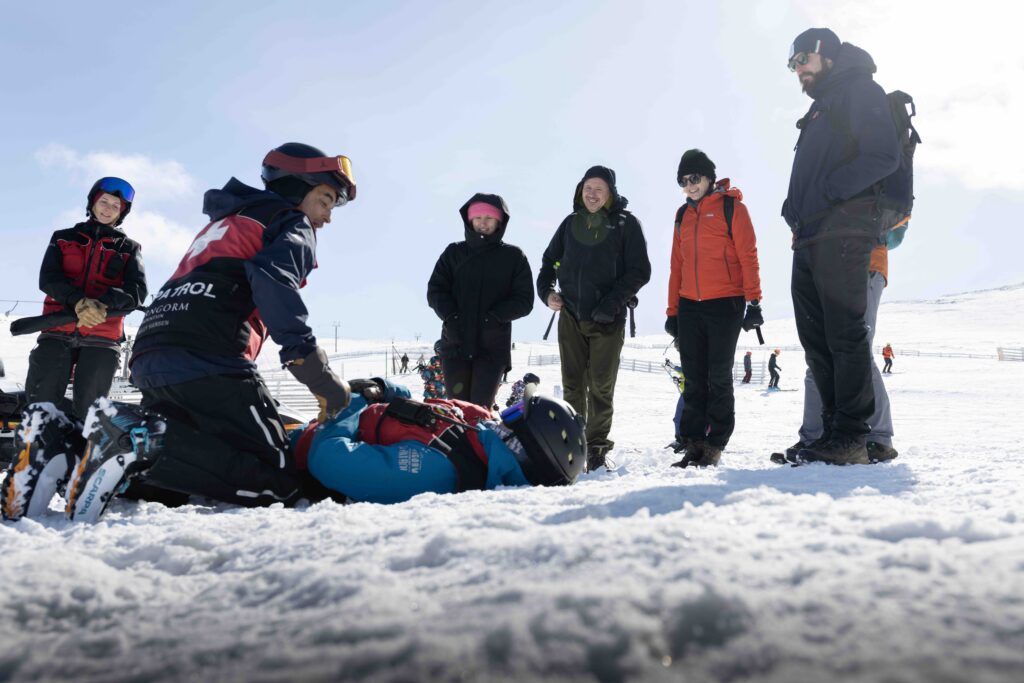
It wasn’t all just sightseeing, though. While there, we met up with the Ski Patrol team, experienced professionals who also serve as active members of the Mountain Rescue team. There was no stress inducing shouting this time though, only a very informative demonstration. It was a fascinating, front-row look at exactly how a professional alpine rescue unit coordinates under real conditions to save an injured skier on a live slope.
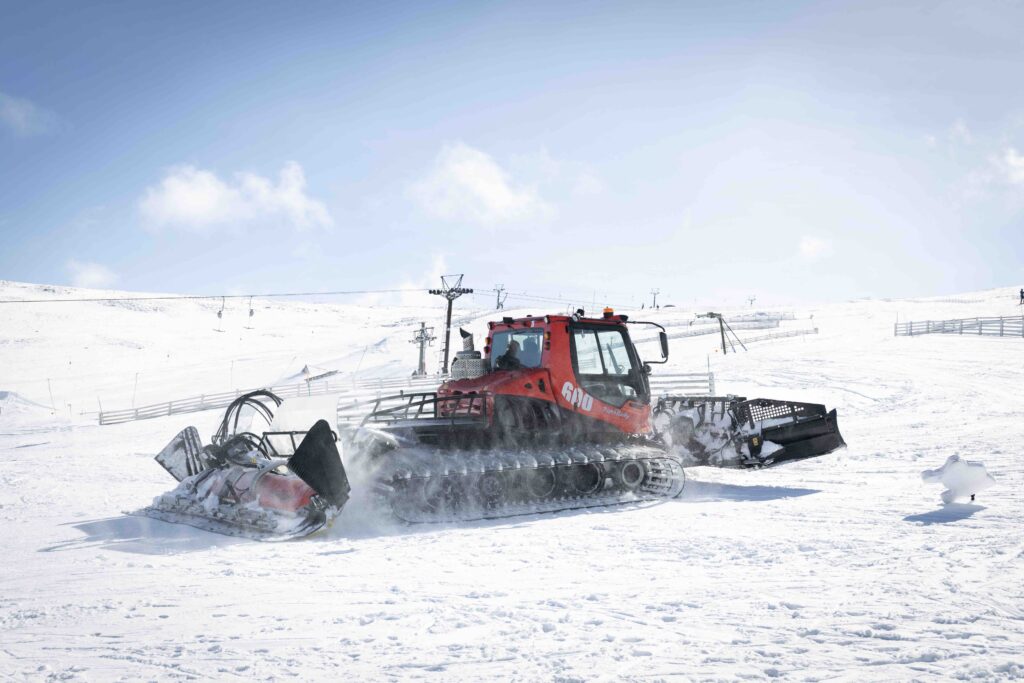
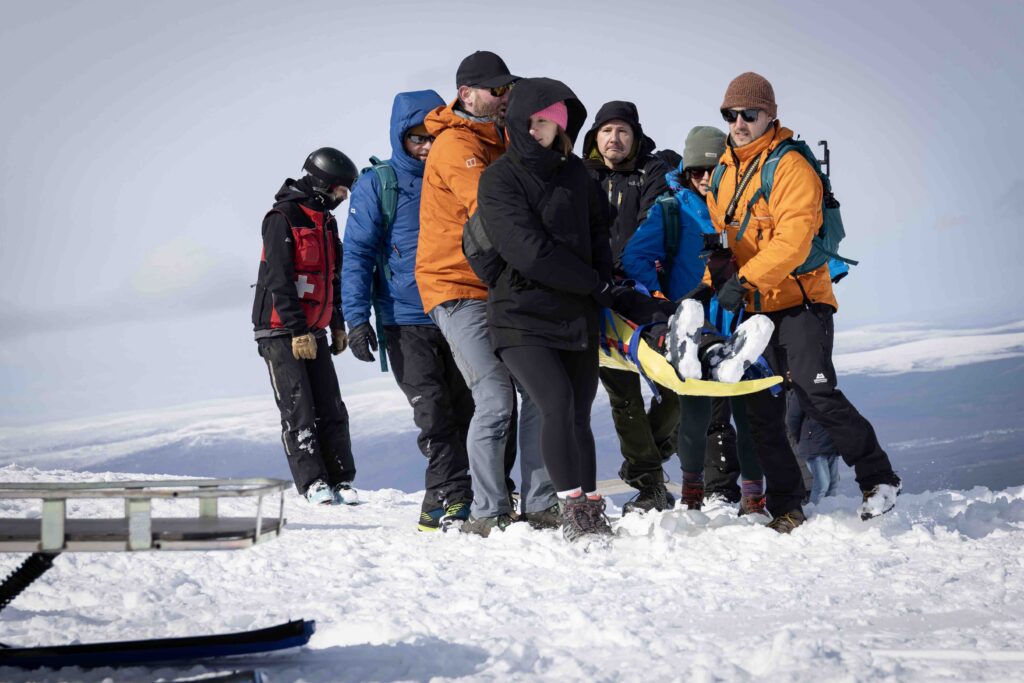
The team walked us step-by-step through their packaging and extraction process and even got us hands-on with the equipment. We watched and assisted as they stabilised the “casualty,” securely encapsulated them within a specialised inflatable rescue stretcher to protect them from both physical trauma and hypothermia, and carefully transferred them onto a waiting Skidoo trailer.
Seeing the fluid teamwork required to secure the trailer and transport the casualty smoothly down the mountain slopes to the waiting ambulance in the car park was an incredible insight. It perfectly bridged the gap between our basic first aid training and the massive, highly organised system that swings into action during a mountain emergency.
Knowing It, Hoping Never to Need It
Our final objective was to make our way up to the summit of Cairngorm where I talked with some of the others on the course on the takeaways of both the ‘Save a Life’ course and what we’d seen from the Ski Patrol.
My main takeaway was needing a clear mind to make sure that decisions are made efficiently and making sure that everybody knows what they need to do; the responsibilities of calling emergency services, knowing where you are, dealing with dangers around you, and prioritising what is going to save the life of the injured party. We’re not medical professionals, we know we aren’t, but to be able to help that person until a first responder or Primary Care is reached, ultimately sending them back to their family and friends safely.
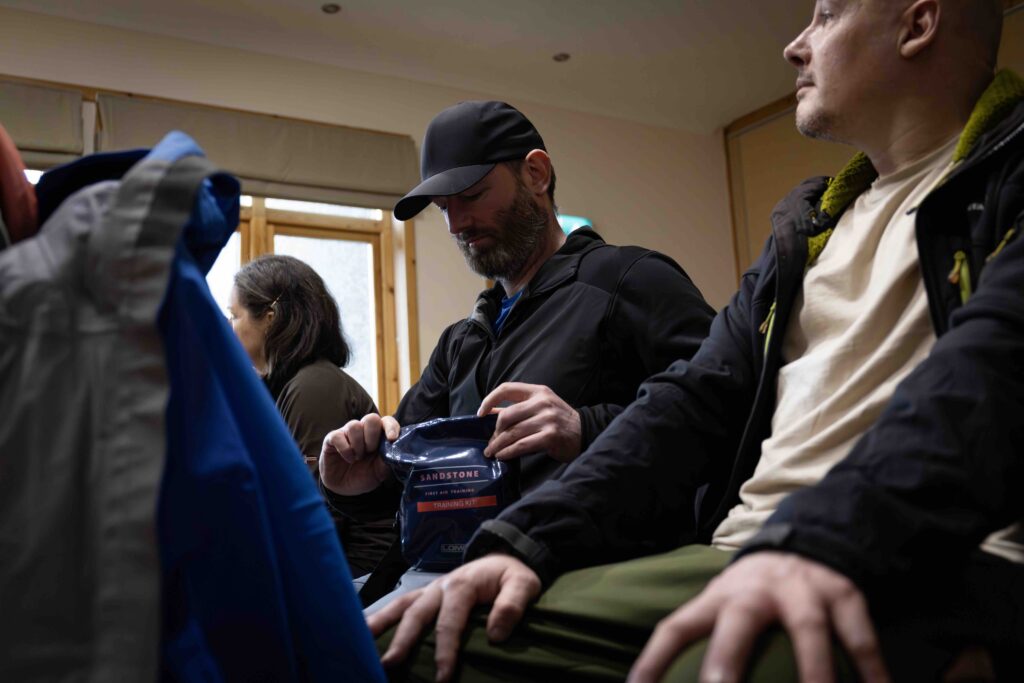
I’d really like to thank Sandstone Training, Vango Outdoors, Glenmore Lodge, and Cairngorm Mountain Ski Patrol for the valuable insight and the tools that they have given me and my fellow emergency first aiders to be more confident when going out into the outdoors. I will be carrying my ‘Save a Life’ kit at the bottom of my pack in the hope that I never have to use it, but knowing that I know how to use it in the case of an emergency.
Find out more about Sandstone Training HERE and take a look at all thecool things our mate Davy Wright does HERE.